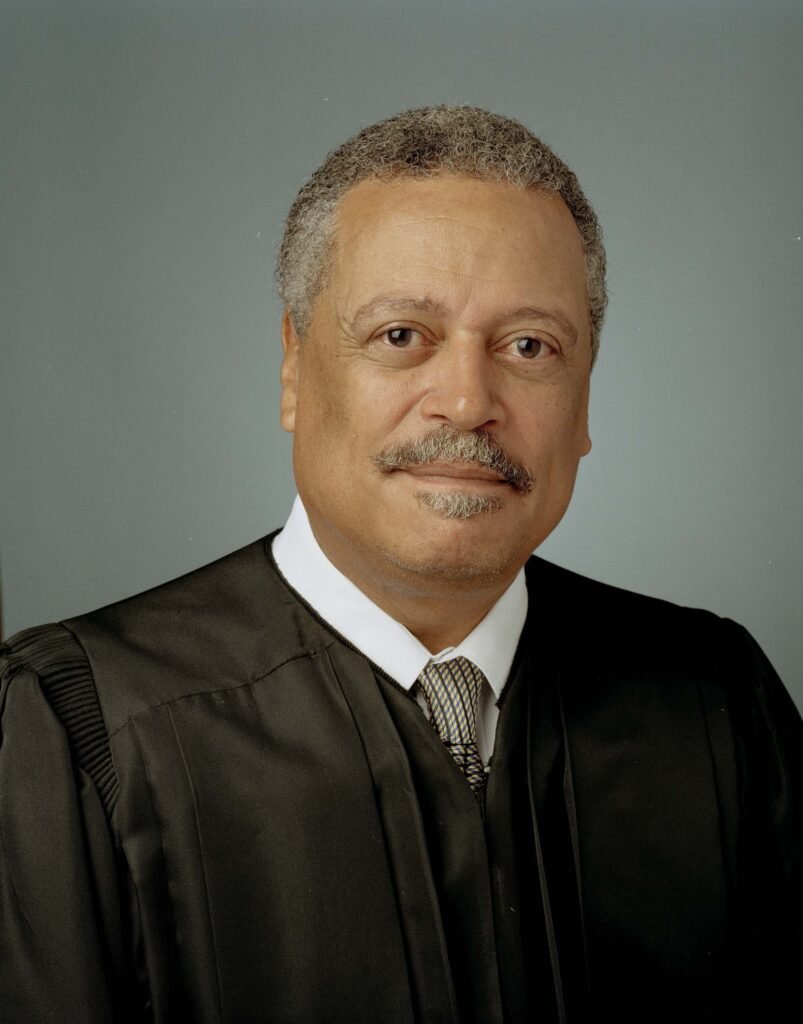
U.S. District Judge Emmet Sullivan has ordered Attorney General Todd Blanche to turn over unredacted FBI notes of an interview with a woman who claims Trump sexually assaulted her when she was 13 years old. Blanche’s delay can land him and the other DOJ employs involved in jail.
On June 25, Sullivan ordered Blanche to either release the unredacted FBI interview notes and other documents or justify withholding them. Blanche chose the withhold and justify option.
Sullivan has already expressed frustration with Blanche’s excuses, referred to his own history of holding government attorneys in contempt, and admonished Blanche, “That isn’t a threat. …That’s a promise.”
If Sullivan holds Blanche and other DOJ employees in contempt, he can incarcerate Blanche and the other employees until the DOJ delivers the documents requested.
Although it’s uncertain whether Trump could pardon the offenders from criminal contempt charges, it’s clear that he could not pardon them from civil contempt, which also can be used to jail violators until they comply with a court order.
The power to compel compliance with court orders, including for contempt, is backstopped by the ability to jail people who defy them.
But judges have traditionally relied on the U.S. Marshal’s Service which reports to both the courts and the Attorney General for enforcement, who are part of the DOJ. Although it’s virtually certain that Trump’s DOJ would refuse to enforce a court’s sanction for civil contempt, the courts have another option.
The Supreme Court has unanimously held that courts can appoint a private attorney outside the executive branch to prosecute civil contempt if the executive branch refuses to do so. It has also held that “the ability to punish disobedience of judicial orders” is “essential to ensuring that the Judiciary has a means to enforce its own authority without complete dependence on other Branches (emphasis added).”
There is also a compelling Constitutional basis for holding that a president cannot pardon people guilty of criminal contempt for violating a court order. Although the Trump-leaning Republican majority of the Supreme Court has said in non-binding dictum that a presidential pardon cannot be impaired by any court, it’s hard to believe – even for Trump Supreme Court loyalists — that the framers of the Constitution could not have intended the pardon power to usurp the Constitution’s core requirements of checks and balances and separation of powers.
Tragically, neither the Supreme Court nor Congress’s Republican enablers act as checks on the DOJ. The judiciary is the only check on Trump’s DOJ.
Twitter (X): https://x.com/ChaosPolicy/status/2095909488608071853?s=20