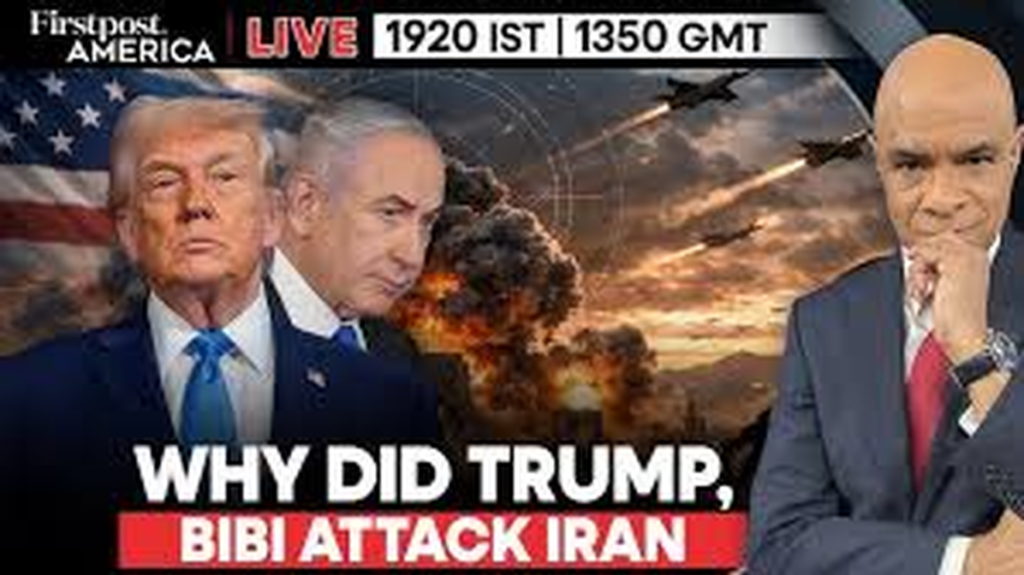
There are reasons why the Constitution gave Congress the sole power to declare war. It’s there to check executive power, ensure the decision is deliberate and represents the will of the people, rather than the desire of the President. “So what,” said President Trump, and launched his attack on Iran without asking for Congressional approval.
The fallout is likely to upend the entire region, produce significant civilian casualties, cause major losses to the U.S. military and our allies in the region, result in major economic disruption in the United States and throughout the world, and leave the region destabilized for years to come.
The attack is also unlikely to lead to regime change. That and denuclearization of Iran are Trump’s stated missions. Regime change failed before – even backfired. Like Trump’s mission in Iran, the invasion of Iraq was aimed at regime change. We killed their leader and triggered a power vacuum, a brutal, decade-long civil war, regional instability a “dysfunctional kleptocracy,” and increased hatred towards America.
Worse, the attack heightens the risk of a nuclear event, either by intention or mistake. A nuclear attack could originate right here at home with a President who wanted to nuke North Korea in the last month of his first administration. Fortunately, General Mark Milley was there to stop him. There’s no Milley now, only an alcoholic, unqualified Fox News co-host shocking confirmed by Republican Senators.
A nuclear disaster could also come in the form of Iran’s final retaliation. Most Western observers view Iran’s conduct through the lens of protecting their national interest, but its priorities are more consistent with the Mahdist religious doctrine, which dictates that military might is central to its doctrines, and many jurists maintain that the deployment of nuclear weapons is permissibleas a last resort.
An unintended nuclear launch has always been more likely than an intentional one. Of the 24 close calls where nuclear war was narrowly avoided, only the Cuban missile crisis involved one nuclear power threatening another. The other incidents often resulted from faulty technology, misinterpreted data, human error during the Cold War and beyond, the 1983 Soviet false alarm, and the 1983 Nato military exercises. Eight of the closest calls stand out as among the most provocative of a launch in the in the Middle East.
Iran still has lethal military power. Since last June, it has moved to rebuild its ballistic missile arsenal at what an Israeli military assessment described as “a rapid pace.” It can fire hundreds of missiles at U.S. bases and other facilities and awaken its regional network of partners and proxies, namely Hamas, Hezbollah, and Palestinian who share Iran’s animosity toward Israel the United States and oppose the Jewish state’s existence. Support from Tehran has also enabled Yemen’s rebel Houthis to fire missiles at Israel and attack its commercial ships in the Red Sea — actions the Houthis called a show of solidarity with Hamas.
Iran has sent missiles and drones to attack U.S. and UK facilities in Qatar,the United Arab Emirates, Kuwait, Oman, Jordan, Iraq and Cyprus, raising the danger of bombing nuclear power plants, reactors and fuel storage facilities in many of those countries.
Each of the countries under attack indicated high levels of preparedness to retaliate for the actions of Iran.
Iran has many ways it could respond to Trump’s attack, including cyber operations. Between 2012 and 2014, Iran targeted U.S. financial institutions, Saudi Aramco oil, and the Las Vegas Sands Corporation. It could also to attack critical infrastructure.
Intelligence assessments indicate that Iran poses a threat in the U.S. through networks believed to be operating as sleeper cells.
If hostilities continue to escalate, Trump’s war could plunge the global economy into an inflationary crisis led by the price of oil. The conflict has disrupted shipping, leaving at least five tankers damaged and around 150 ships stranded around theStrait of Hormuz. Marine insurers are cancelling war risk coverage for vessels and oil shipping rates are set to surge further.
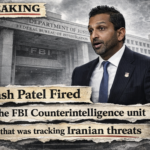
Trump’s reasons for the attack conflict with Marco Rubio’s and are contradicted by the facts, raising suspicions as to Trump’s motives. Heightening those suspicions, just days before Trump bombed Iran, his FBI Director, Kash Patel, fired the counterintelligence unit tasked with monitoring threats from Iran and its proxies, hobbling the United States ability to detect and subvert retaliatory actions against the United States, raising suspicions as to Trump’s motives.
Truth is who the hell knows why Trump bombed Iran? His denuclearization motive is contradicted by his claim that his attacks last summer obliterated Iran’s nuclear weapons capacity, a claim he repeated during his recent State of the Union address. Regime change is fruitless – witness Iraq. He also bizarrely accused Iran of interfering in 2020, 2024 elections to try to defeat him.
Was it to give the Republican party an edge in the midterms? Or to create a state of emergency in an attempt to delay them? Or to rev up his base? You decide.